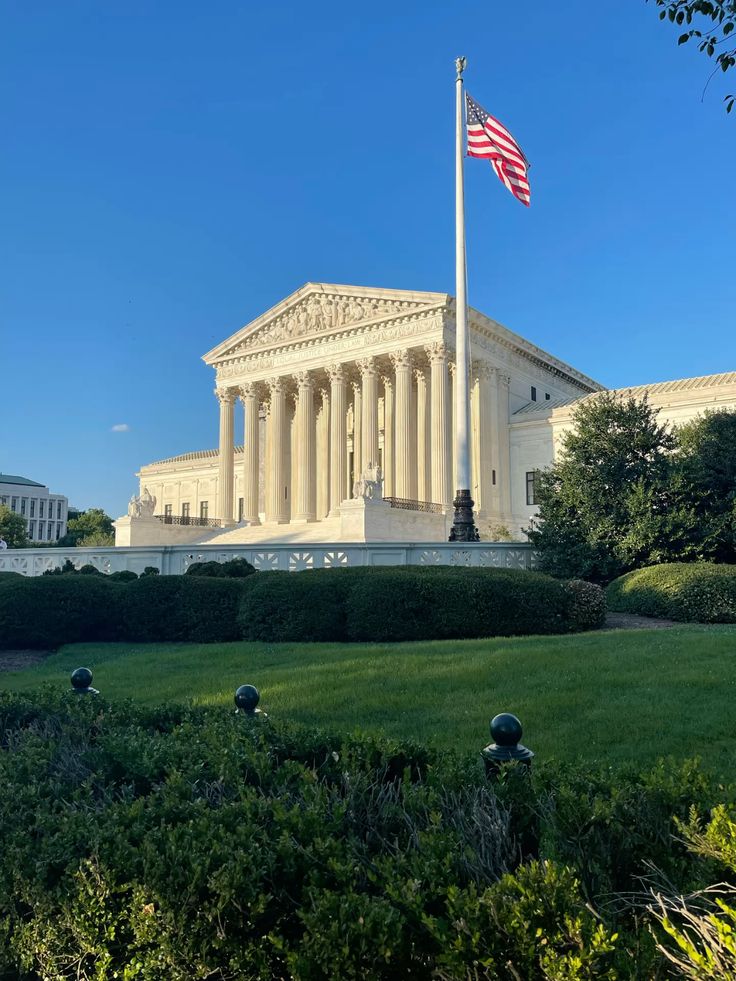
The Supreme Court’s Expanding Role in American Government
The United States Supreme Court was never meant to wield this much power. The Founding Fathers, in crafting the Constitution, were brief—perhaps too brief—on the role of the judiciary. Article III, Section 1 of the Constitution simply states:
“The judicial Power of the United States, shall be vested in one supreme Court, and in such inferior Courts as the Congress may from time to time ordain and establish.”
What began as a limited branch of government has transformed into one of the most powerful institutions in American politics. But how did this happen? And what does it mean for democracy?
The Supreme Court’s Evolution: From Weakest to Strongest
At the nation’s founding, the Supreme Court had little authority compared to Congress and the presidency. It lacked an enforcement mechanism, had no clear role in lawmaking, and was, in many ways, an afterthought. That changed with Marbury v. Madison (1803), when Chief Justice John Marshall established the principle of judicial review, granting the Court the power to strike down laws deemed unconstitutional.
From that moment forward, the Supreme Court became the final arbiter of the Constitution, dramatically expanding its influence. Consider some of the major turning points in its growth:
- Judicial Review & Marbury v. Madison (1803) – Established the Court’s authority to declare laws unconstitutional.
- Dred Scott v. Sandford (1857) – Demonstrated the Court’s power but also its ability to reinforce injustice.
- Brown v. Board of Education (1954) – Proved that the Court could drive social change.
- Citizens United v. FEC (2010) – Expanded corporate influence in elections by equating money with free speech.
Through these cases, the Court has shaped laws, influenced culture, and, in some instances, fundamentally altered American democracy.
The Supreme Court Today: A Breakdown of Its Justices
The current Supreme Court consists of nine justices, each appointed for life. The ideological divide is stark, and decisions often fall along predictable conservative-liberal lines. Here’s a look at the composition of the Court:
Current Justices and Their Leanings:
- Chief Justice John Roberts – Conservative-leaning but occasionally a swing vote.
- Justice Clarence Thomas – The most conservative justice on the Court.
- Justice Samuel Alito – Strong conservative voice.
- Justice Neil Gorsuch – Conservative, but libertarian-leaning.
- Justice Brett Kavanaugh – Conservative, but has surprised with some moderate rulings.
- Justice Amy Coney Barrett – Solidly conservative.
- Justice Sonia Sotomayor – Strong liberal voice.
- Justice Elena Kagan – Liberal but pragmatic.
- Justice Ketanji Brown Jackson – Liberal, newest member.
With a 6-3 conservative majority, the Court has already made significant rulings that impact voting rights, corporate power, and social policies. The question remains: Is this balance healthy for democracy?
Why Americans Should Be Concerned
The Supreme Court’s unchecked power has major implications for democracy. Unlike elected officials, justices are appointed for life, meaning they serve decades beyond the president who nominated them. This raises critical concerns:
- Lack of Accountability: Justices do not answer to voters, yet they shape laws that affect millions.
- Partisan Appointments: The process has become politicized, with presidents selecting ideologically driven nominees.
- Expansion of Corporate Influence: Rulings like Citizens United have strengthened oligarchic power in America.
- Rollback of Rights: Recent decisions have weakened voting rights and reproductive freedoms.
When one unelected body holds this much power, the risk of an oligarchy—where the wealthy and powerful dictate national policy—becomes real.
A Historical Lesson: The Danger of Judicial Power
History warns us about the dangers of unchecked judicial authority. In ancient Rome, a small elite consolidated legal power, leading to corruption and ultimately the fall of the Republic. Are we following the same path?
When a Supreme Court majority consistently rules in favor of corporate interests, weakens labor rights, and limits government regulation of big business, democracy itself is at risk.
Frequently Asked Questions (FAQ)
Q: Can the Supreme Court be reformed?
A: Yes. Ideas include term limits, expanding the number of justices, and imposing ethical guidelines. However, these reforms face significant political resistance.
Q: How does the Supreme Court impact everyday Americans?
A: From healthcare to voting rights to free speech, Court decisions shape nearly every aspect of American life.
Q: Why does the Supreme Court have lifetime appointments?
A: The Founders believed lifetime tenure would prevent political influence, but in today’s hyper-partisan era, it has arguably done the opposite.
What Can You Do?
The Supreme Court’s power won’t shrink unless the people demand change. Here’s how you can help:
- Educate Yourself – Stay informed about Supreme Court cases and their impact.
- Advocate for Reform – Push for court expansion, term limits, or ethics rules.
- Vote for Leaders Who Support Democracy – Presidents and senators appoint justices, so your vote matters.
The Supreme Court is shaping America’s future—whether we like it or not. The question is: Will we let an unelected body dictate our democracy, or will we take action?
Join the Movement
The Cassandra Report is dedicated to exposing the threats against democracy and mobilizing citizens to act. Follow us, stay informed, and demand accountability before it’s too late.
 The Cassandra Report
Leave a comment